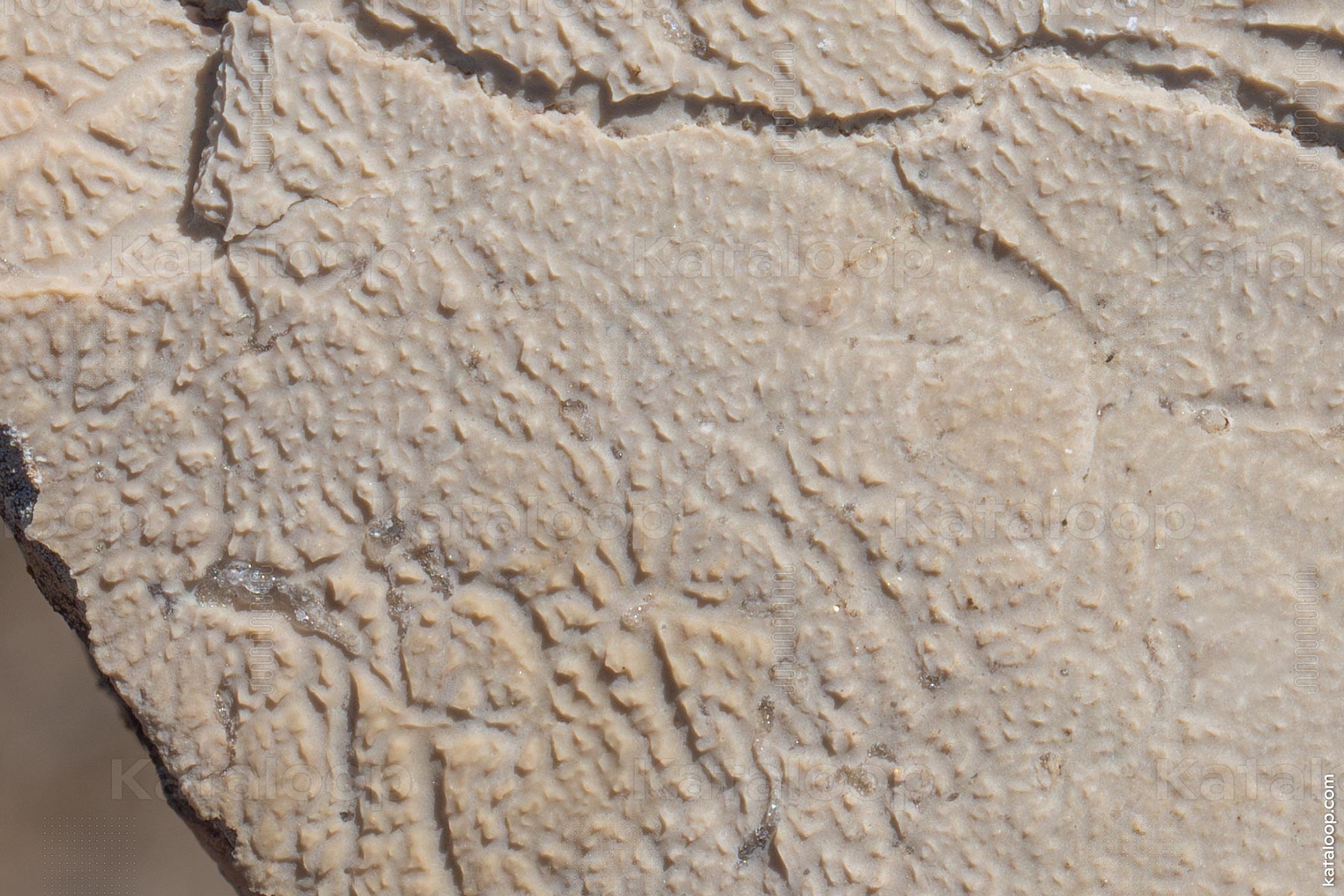
Close-up of fossilized imprints in stone held by hand
Select your license:

Questions about the subject, usage, technology & more
How does a plant leaf get preserved as a fossil imprint in sedimentary rock?
When a leaf falls onto soft sediment like mud or silt, it gets buried under additional layers. Over millions of years, pressure and mineralization harden the sediment into rock. The organic material decays, but its shape is pressed into the stone as a negative imprint, preserving fine details like veins and leaf margins in remarkable clarity.
How can this photo be used?
This image covers a wide range of commercial uses under a Kataloop license. Examples include educational materials on geology and paleontology, book covers or magazine features on natural history, museum campaign visuals, and web or infographic content focused on earth sciences. With a resolution exceeding 49 megapixels, the image is also well suited for large-format print applications.
What mood does this photo convey?
A fossil leaf imprint held up to the light conveys the sense of a direct personal discovery. The pale stone surface and clearly defined leaf veins create a matter-of-fact yet captivating impression. The image communicates the transience of life and wonder at geological timescales without being emotionally charged.
What equipment was used to capture this photo?
The fine leaf veins of this fossil imprint are rendered with remarkable sharpness in this stock photo (ID 6306372). Shot with the Sony ILCE-1 and FE 24-70mm F2.8 GM II, the combination delivers every surface detail of the sedimentary rock at 8640 x 5760 pixels. The Sony Alpha 1 pairs 50 megapixels with high dynamic range, while the GM II lens provides minimal distortion and excellent close-range clarity.
What visual style or trend does this photo represent?
Fossils and geology are seeing growing visual demand in science communication and education. Authentic, hand-held field finds align with the trend toward genuine fieldwork imagery over staged studio photography. The subject also fits broader conversations about Earth history and climate change, driven by rising public interest in natural sciences through popular science formats.