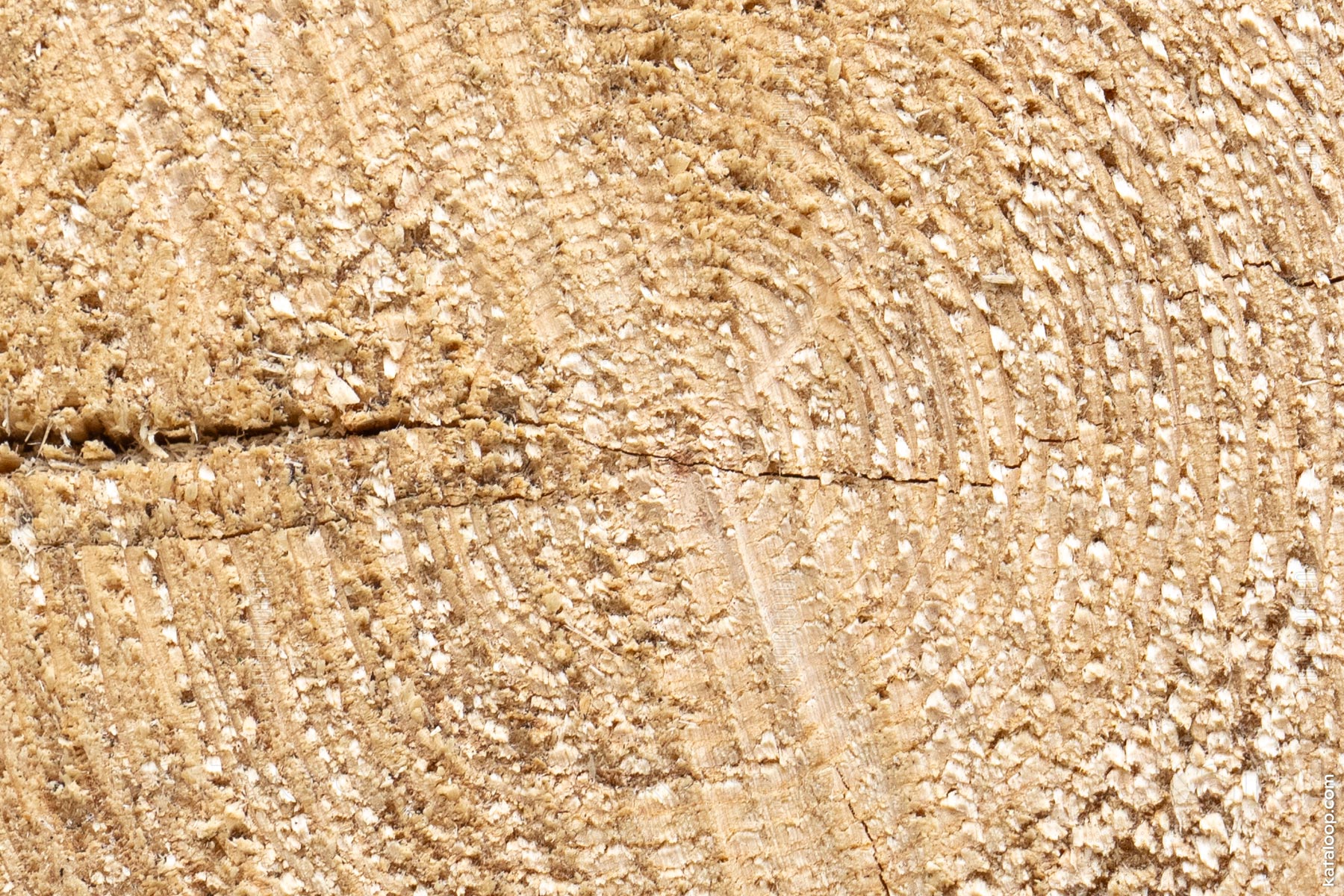
Close-up view of tree rings and texture on cut log
Select your license:

Questions about the subject, usage, technology & more
Why do drying cracks form in a freshly cut log?
When a log is cut, moisture evaporates unevenly from the outer wood faster than from the core. This causes the outer layers to shrink while the center remains moist, creating internal tension. Once that tension exceeds the wood's tensile strength, radial cracks form from the center outward. The process is called checking and is a natural drying phenomenon.
How can this photo be used?
This stock photo, licensed for commercial use, suits forestry and timber industry reports, dendrochronology infographics, and educational content about tree growth. With a resolution of 8640 x 5760 pixels, it also works for large-format print such as trade magazines, exhibition posters, or building materials catalogs without any loss of detail.
What mood does this photo convey?
The cross-section presents the tree as a record of its own history: each ring marks a year, the cracks reflect the tension of drying. The image conveys a matter-of-fact closeness to nature, a sense of transience, and at the same time the durability of the material. The softly blurred forest floor in the background grounds the shot in its natural setting without competing with the subject.
What equipment was used to capture this photo?
The fine annual rings and drying cracks of this log cross-section were captured with the Sony ILCE-1 and FE 24-70mm F2.8 GM II lens. At 50 megapixels and 8640 x 5760 pixels, the camera delivers exceptional detail. The GM II optics achieve precise sharpness across the rough wood surface at f/2.8 while rendering the forest background in smooth, unobtrusive blur.
What visual style or trend does this photo represent?
Sustainability and resource awareness currently shape many communication strategies in the timber and construction industries. Images showing raw materials without staging are increasingly sought for transparent corporate communication and ESG reporting. This cross-section also reflects growing demand for scientific traceability, visible in rising public interest in dendrochronology and climate research.