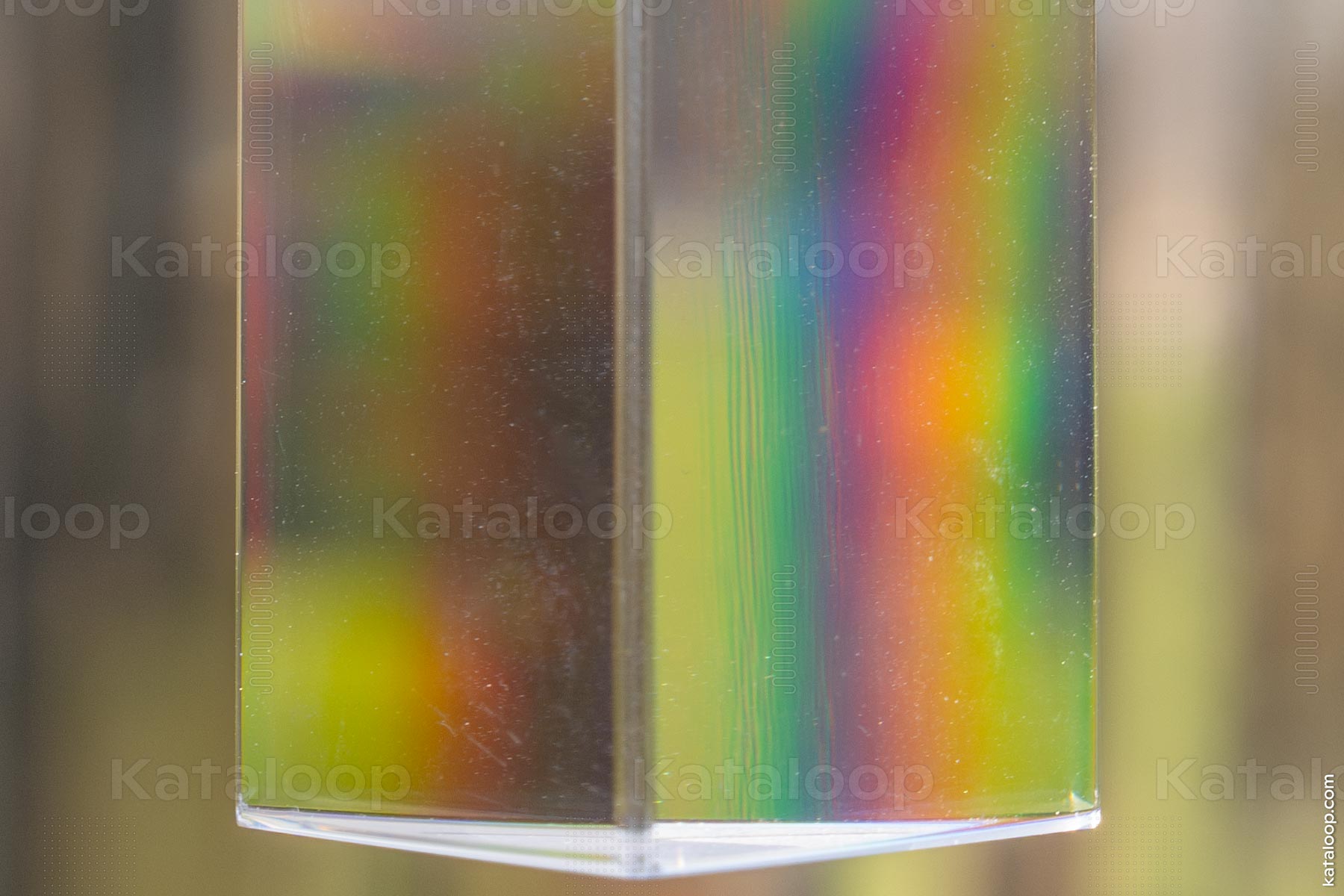
Colorful light diffraction through prism in natural setting
Select your license:

Questions about the subject, usage, technology & more
Why does a glass prism split white light into rainbow colors?
White light consists of all visible wavelengths. When it enters a glass prism, each wavelength is refracted at a slightly different angle due to dispersion: shorter wavelengths like violet bend more than longer ones like red. This separates white light into a continuous spectrum from red through orange, yellow, green, blue, to violet.
How can this photo be used?
With its commercial license on Kataloop, this image serves a wide range of applications. Publishers, e-learning platforms, and educational content creators can use it for physics and optics materials. Creative and advertising agencies frequently use prism visuals for campaigns around creativity, transformation, or diversity. The resolution of 6152 x 4101 pixels also supports large-format print without any loss of quality.
What mood does this photo convey?
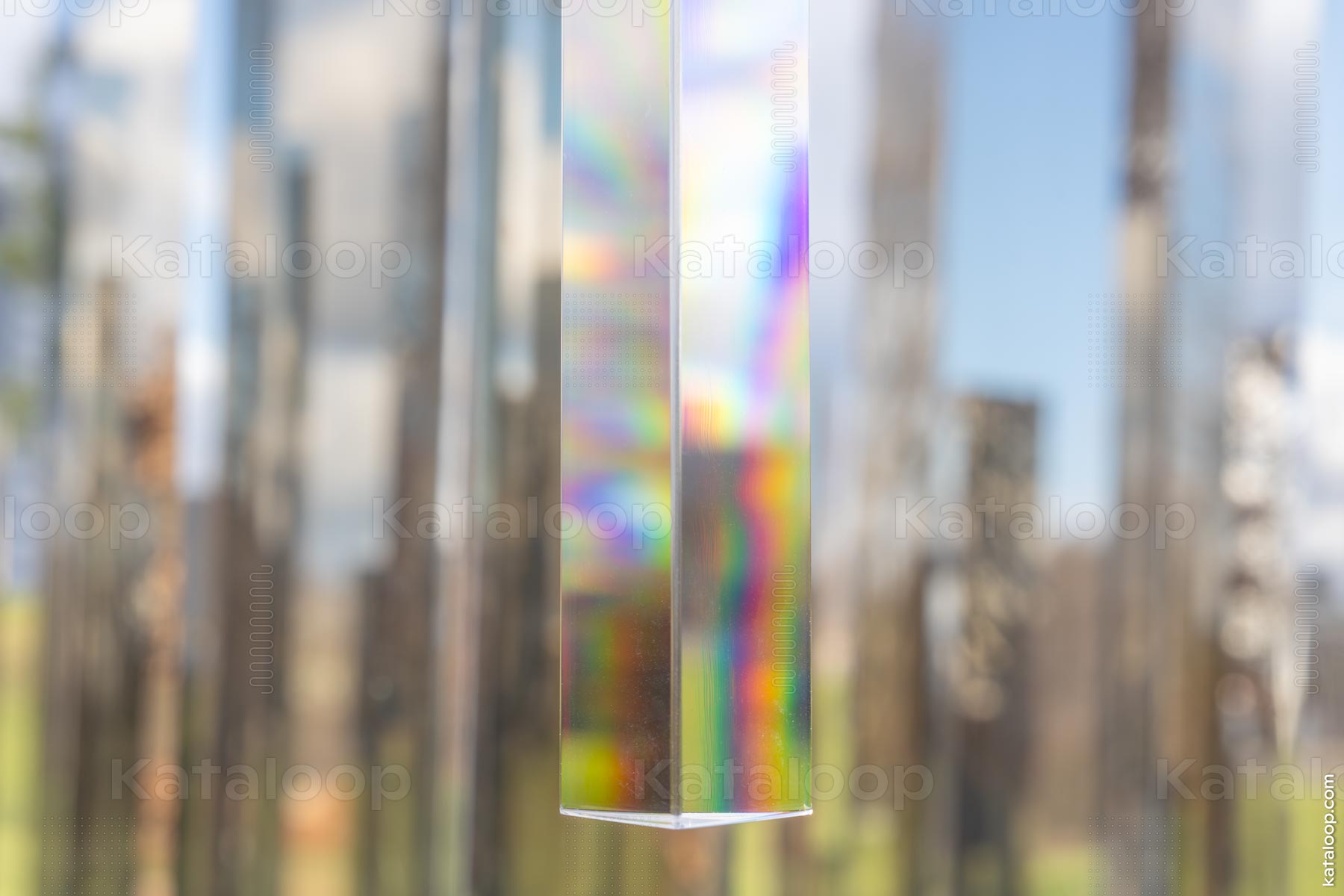
The vertically suspended prism against the soft, blurred natural background creates a calm and visually clear atmosphere. The rainbow colors fanned across the glass surface appear precise and structured without being overwhelming. The image bridges scientific clarity with an aesthetically pleasing color experience.
What equipment was used to capture this photo?
This stock photo was captured with the Sony ILCE-1 paired with the Sony FE 24-70mm f/2.8 GM II lens. The zoom lens allowed precise framing with a shallow depth of field, keeping the prism sharp while softly blurring the natural background. The Sony Alpha 1's 50.1-megapixel sensor renders the fine color nuances of the light spectrum with exceptional detail and accuracy.
What visual style or trend does this photo represent?
Prism visuals are in high demand across design and marketing, as the motif symbolizes themes like diversity, openness, and transformation. At the same time, this image reflects the growing trend toward science-based visual communication, driven by STEM education initiatives and the rise of edutainment platforms. The combination of optics and natural outdoor settings also aligns with the broader visual trend toward authentic, unposed photography.