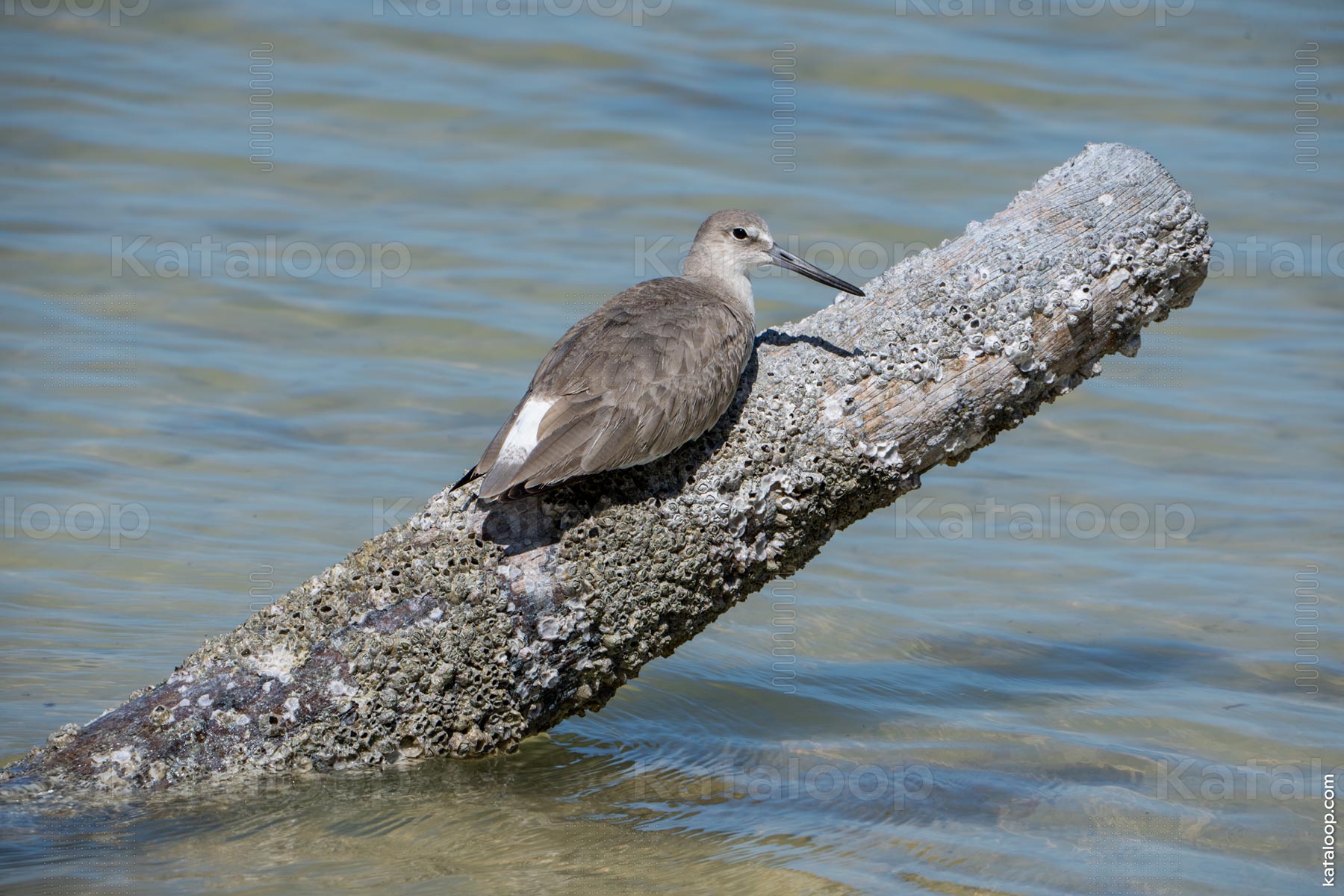
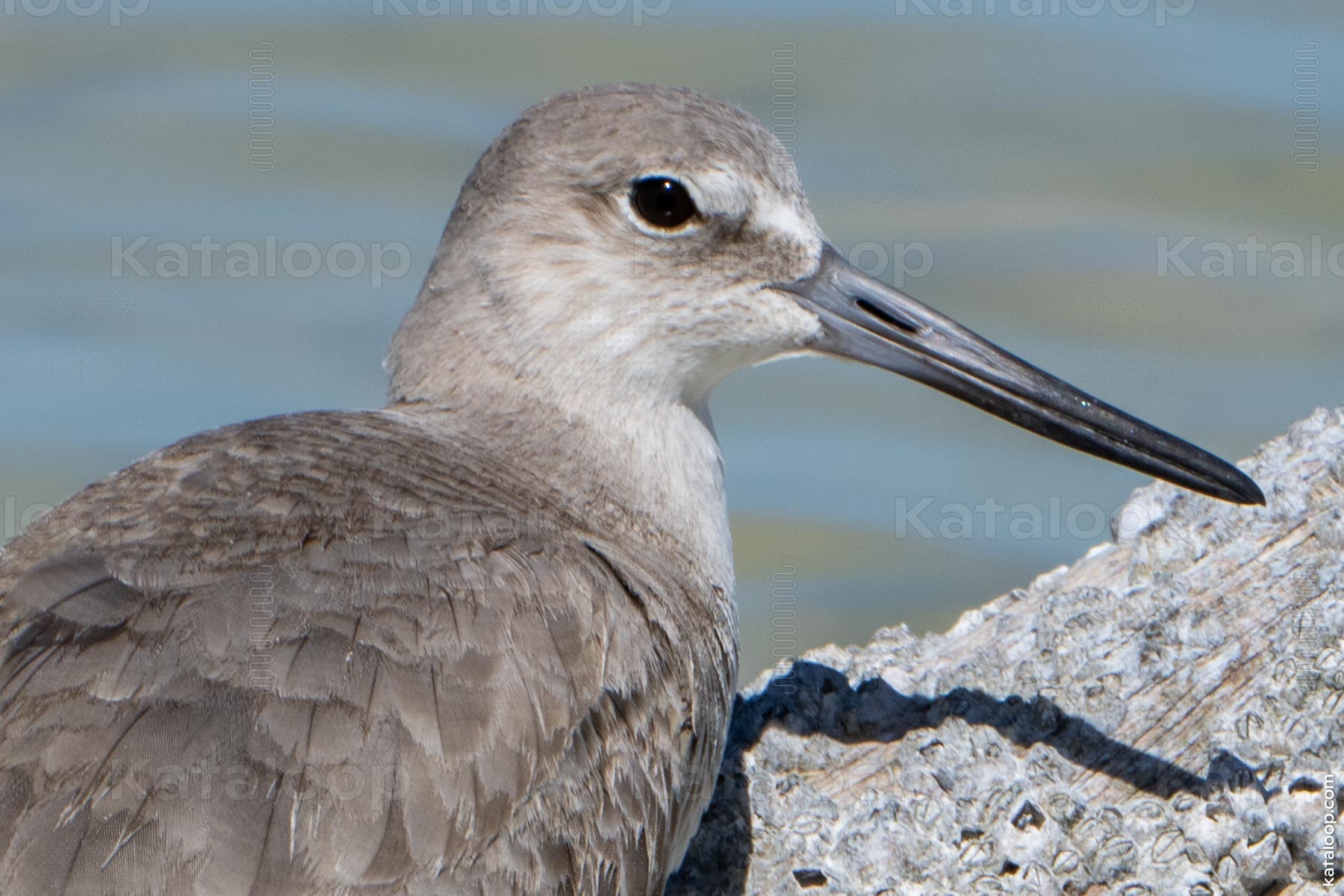
Close-up of a shorebird resting on a log
Select your license:

Questions about the subject, usage, technology & more
What is the white patch on a Willet's wing and what is it used for?
The bold black-and-white wing pattern of the Willet (Tringa semipalmata) is hidden at rest but flashes vividly in flight. It serves as a social signal during courtship displays and flock coordination, and may startle or confuse predators. Outside the breeding season, the plumage appears plain gray, as seen in this photo.
How can this photo be used?
This stock photo suits nature magazines, environmental organizations, and ecotourism providers, for example. Thanks to the commercial license available on Kataloop, it can also be used in advertising, educational materials, or apps focused on coastal wildlife. The 8640 x 5760 px resolution supports large-format prints for exhibitions or nature calendars without any loss of quality.
What mood does this photo convey?
The barnacle-encrusted log, calm water, and muted palette of gray, beige, and pale blue create a quiet, understated atmosphere. The willet appears focused and fully integrated into its surroundings. The image conveys stillness and closeness to nature without idealizing the scene. For those seeking authentic wildlife photography free of staged drama, this image delivers a convincingly natural subject.
What equipment was used to capture this photo?
Shot at 8640 x 5760 pixels, the Sony ILCE-1 (Alpha 1) captures every feather detail of this willet perched on a barnacle-covered log at Holbox. The Sony FE 100-400mm f/4.5-5.6 GM OSS allowed a clean, close-up composition from a safe distance, rendering the water background as smooth bokeh. The built-in Optical SteadyShot (OSS) ensures sharpness even at maximum telephoto reach.
What visual style or trend does this photo represent?
Authentic wildlife photography without staging aligns with the growing demand for nature documentary content and ecotourism imagery. The trend toward unposed animal shots in real habitats is gaining traction in nature media and sustainability communication. Coastal species like the willet also represent themes such as habitat loss and species conservation, making them relevant for NGO and environmental campaigns.
Holbox Island is one of Mexico's most unspoiled coastal destinations, located off the northern tip of the Yucatan Peninsula. Its shallow lagoons and rich birdlife make it a prime spot for wildlife photography. This image, showing a willet perched on a barnacle-encrusted log, was taken in this very environment. Holbox is considered one of the Caribbean's top birdwatching locations.
Great egret perched on a boat in Holbox Island
Quintana Roo stretches along the eastern coast of the Yucatan Peninsula, encompassing world-famous tourist destinations as well as largely untouched nature reserves. Beyond Cancun and the Riviera Maya, the region's wetlands and lagoons serve as resting and wintering grounds for migratory birds and coastal species like the willet. For nature photographers, Quintana Roo offers exceptional biodiversity.