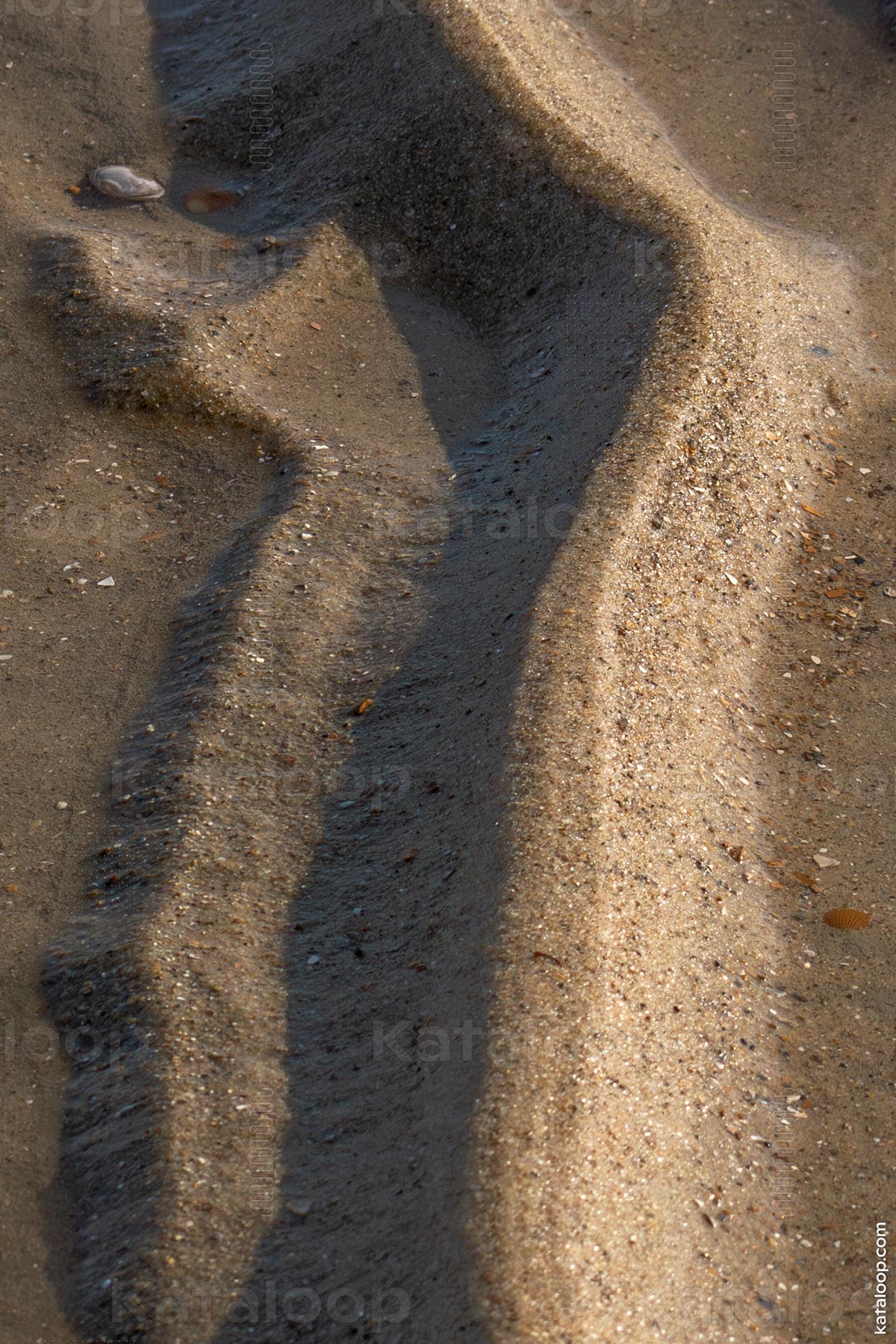
Abstract patterns in sand at low tide on beach
Select your license:

Questions about the subject, usage, technology & more
How do sand ripple patterns form on a beach at low tide?
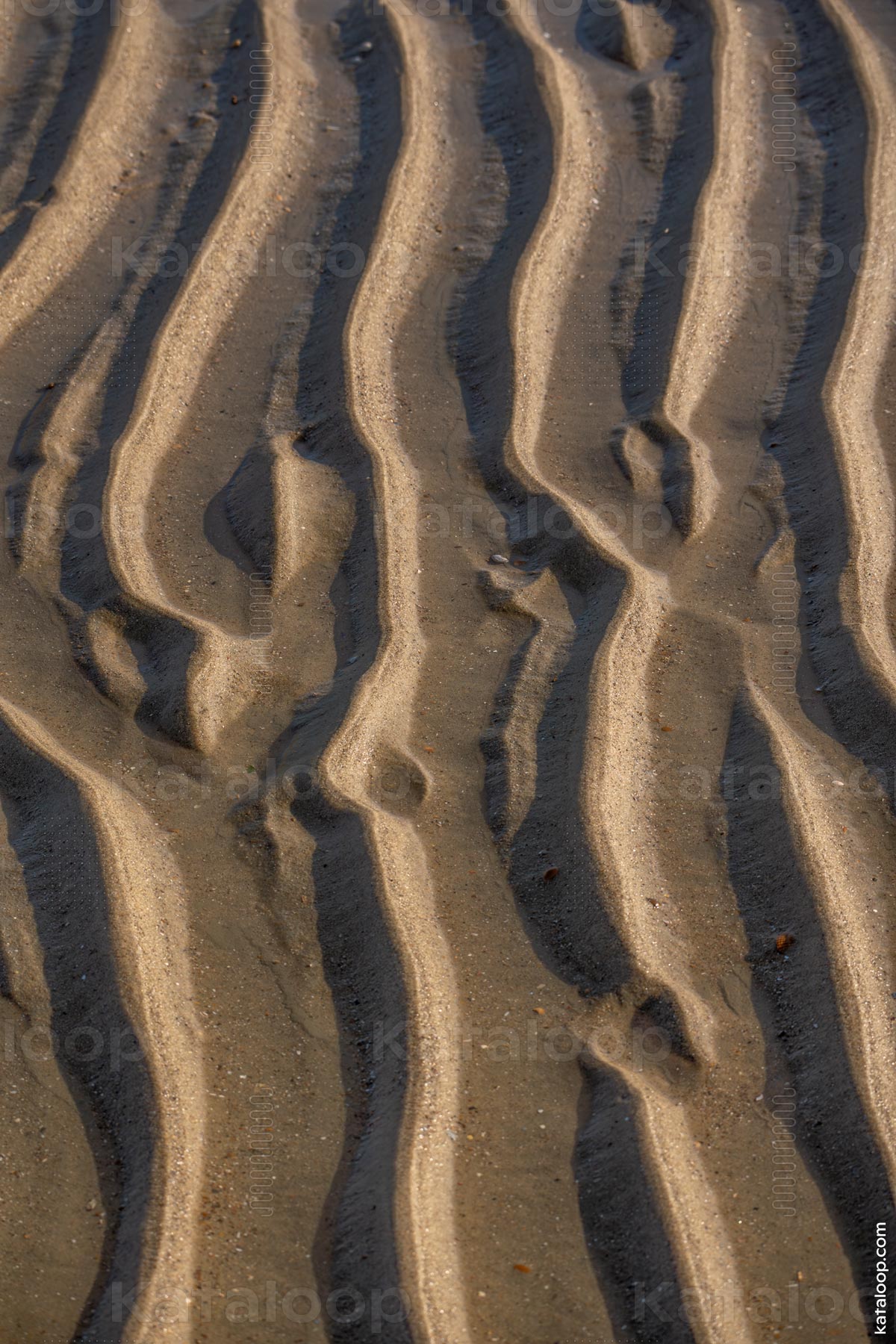
Sand ripples form when water or wind moves over loose sand, causing grains to accumulate in regular ridges. At low tide, receding waves create symmetrical current ripples whose spacing reflects water flow speed and sand grain size. The deeper, shadowed troughs between crests result from sediment being swept aside by the current, producing the characteristic wave-like texture visible on tidal flats.
How can this photo be used?
This stock photo is well suited as a textured background for design projects, websites, print media, or social media campaigns in the fields of nature, travel, or sustainability. The commercial license from Kataloop permits use in advertisements, brochures, or product packaging, for example. The abstract pattern and neutral earth tones make it a versatile background element adaptable to a wide range of visual contexts.
What mood does this photo convey?
The wave-shaped sand ripples with their sharply defined shadow grooves create a calm, almost meditative effect. Warm, raking sidelight emphasizes the three-dimensional surface texture and gives the scene a graphic, structured aesthetic. The tight framing, devoid of horizon or human presence, conveys stillness and a focused attention on pure natural form.
What equipment was used to capture this photo?
The fine sand ripples and deep shadow furrows in this beach photo were captured with the Sony ILCE-1 and the Sigma 100-400mm F5-6.3 DG DN OS Contemporary lens. The Alpha 1's 50-megapixel sensor delivers exceptional detail across this portrait-format image (5760 x 8640 pixels), resolving individual sand grains with precision. The telephoto focal length compresses the perspective, giving the ripple pattern a strong graphic quality.
What visual style or trend does this photo represent?
Abstract natural textures are trending: many creative agencies and brands favor organic patterns over illustrated graphics to signal authenticity. Sand ripples evoke slow living and a return to natural processes. This image also addresses the ongoing demand for neutral, earth-toned backgrounds in minimalist design, making it relevant for contemporary branding and editorial contexts alike.
Nieuwvliet is a small coastal village in southwestern Zeeland, situated directly along the Dutch North Sea shoreline. Its beach ranks among the widest and most unspoiled in the region. At low tide, as clearly visible in this photo, the sea exposes vast tidal flats where intricate sand formations emerge naturally. Nieuwvliet is valued for its quiet coastal atmosphere and draws nature photographers and travelers seeking an authentic seaside experience away from crowded resorts.