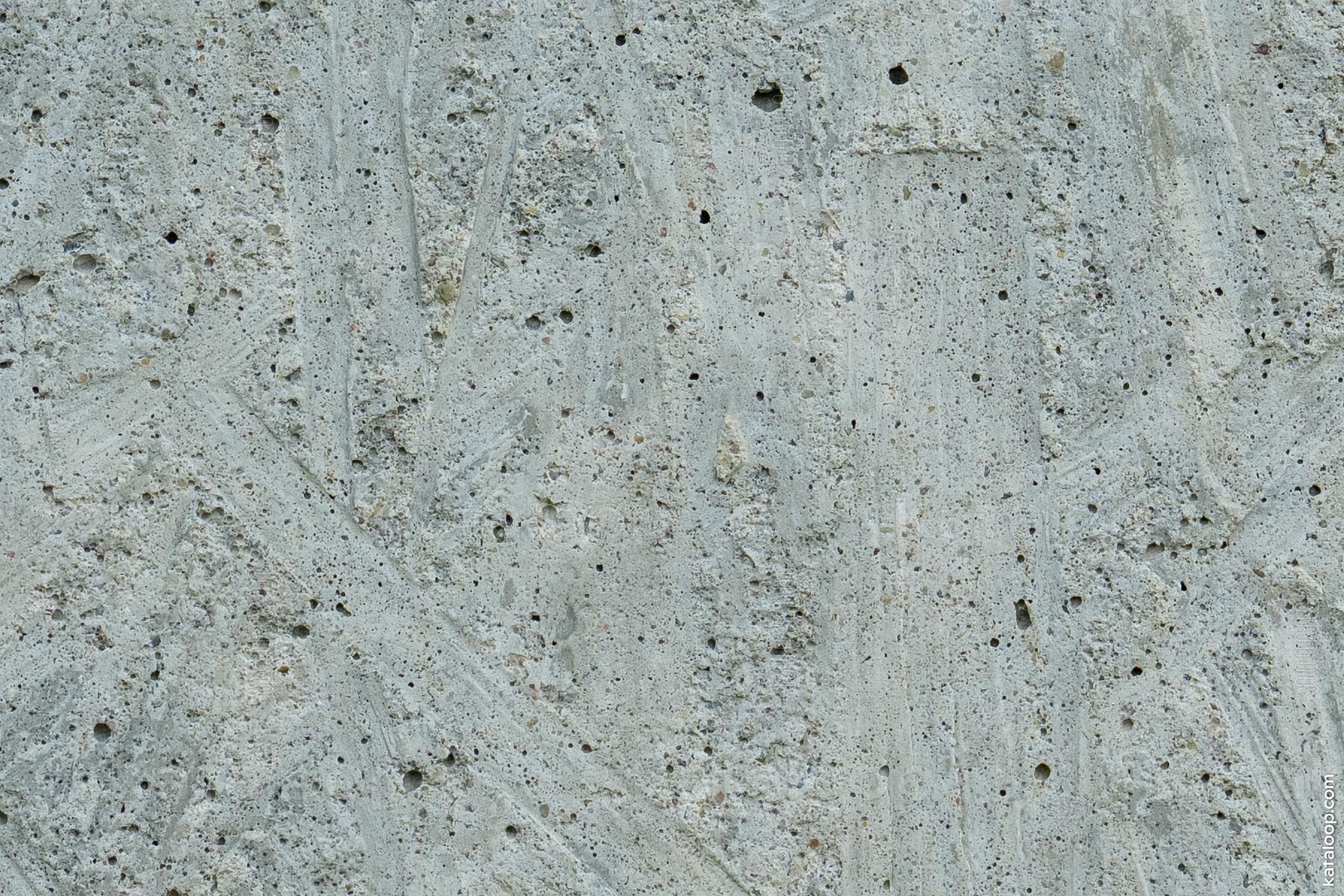
Close-up texture of exposed aggregate concrete surface
Select your license:

Questions about the subject, usage, technology & more
What causes the scratch-like marks and pores visible on exposed aggregate concrete surfaces?
The linear scratch marks on exposed aggregate concrete result from formwork liners or surface retarders used during casting, which partially dissolve the cement paste to reveal aggregates. Air pores form when trapped air bubbles cannot fully escape the mix. Both effects are inherent to the production process and are often considered characteristic of architectural concrete.
How can this photo be used?
This stock photo is cleared for commercial use and, at 8640 x 5760 pixels, scales to large-format applications without quality loss. Example uses include architecture communication, construction supplier campaigns, interior design publications, as well as background textures for websites, app interfaces, and print materials.
What mood does this photo convey?
The uniformly grey surface with its irregular scratch marks, embedded particles, and air pores conveys matter-of-fact directness and material honesty. The image reads as sober and industrial without feeling cold. It communicates durability and raw authenticity, making it a strong neutral anchor in design contexts.
What equipment was used to capture this photo?
The fine surface structure of this exposed concrete was captured with the Sony ILCE-1 and the FE 24-70mm F2.8 GM II lens. At 8640 x 5760 pixels, the 50-megapixel full-frame sensor renders individual pores and scratch marks with remarkable sharpness. The fast G Master zoom lens delivers consistent edge-to-edge clarity across the entire flat surface.
What visual style or trend does this photo represent?
Raw, unclad materials like exposed aggregate concrete reflect the ongoing trend toward brutalism and material authenticity in architecture and interior design. The image also mirrors growing demand for texture photography as a design element, used in UI design, branding, and editorial layouts to add tactile grounding to digital spaces.