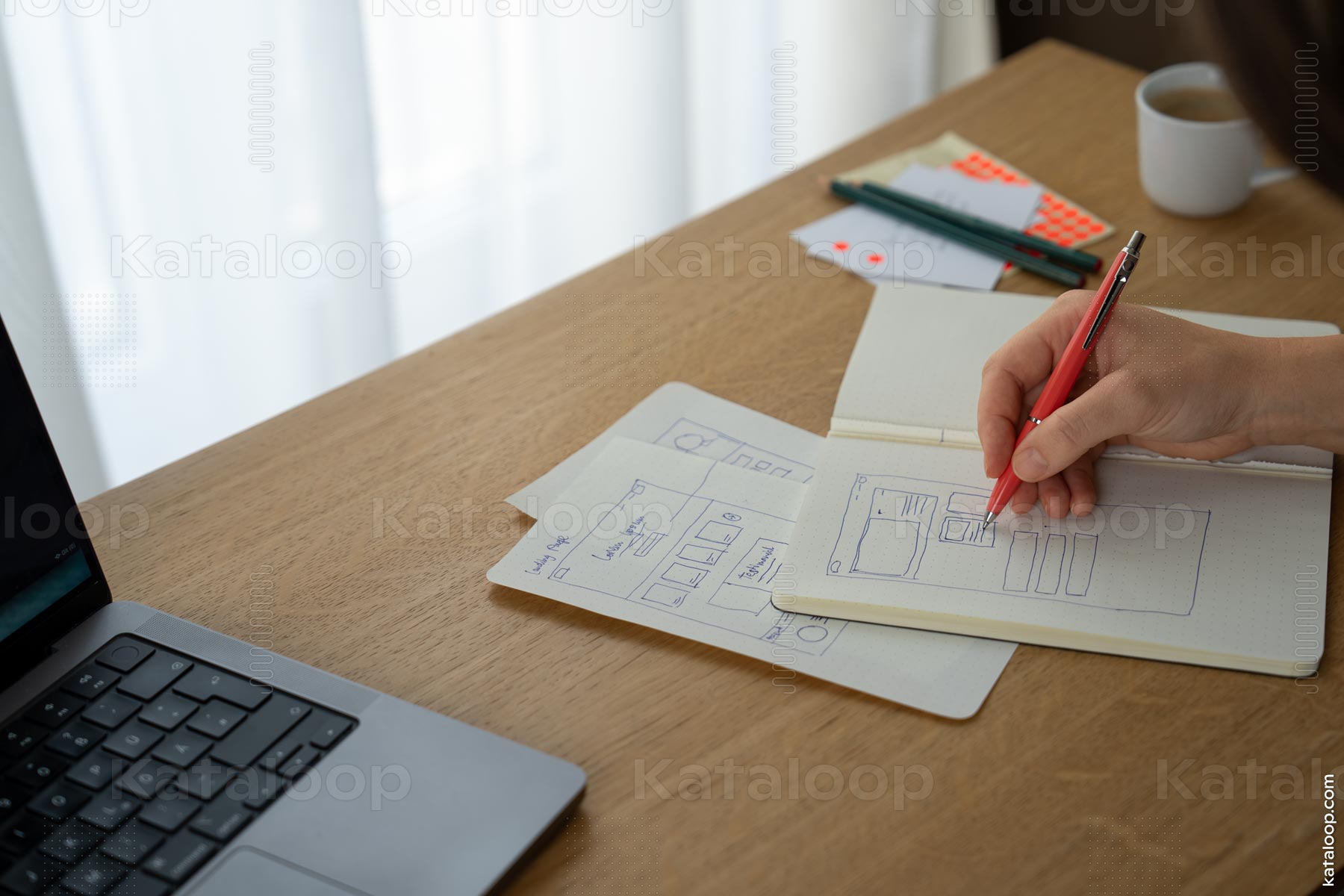
Website wireframe sketching on notebook with laptop
Select your license:

Questions about the subject, usage, technology & more
Why do UX designers still sketch wireframes by hand instead of using software?
Hand-drawn wireframes allow designers to explore ideas rapidly without the constraints of digital tools. Sketching on paper encourages divergent thinking, makes it easy to discard or revise concepts, and keeps early discussions technology-neutral. Studies in UX practice show that low-fidelity paper sketches reduce fixation on visual details, helping teams focus on structure and user flow first.
How can this photo be used?
With a commercial license on Kataloop, this stock photo suits a wide range of applications, for example agency websites, UX portfolios, blog articles on web design, or product brochures for design tools. The native resolution of 8640 x 5760 pixels supports large-format print use as well as digital campaigns and social media content without any loss of quality.
What mood does this photo convey?
The tidy wooden desk and natural window light create a calm, focused work atmosphere. The sketched rectangles and handwritten labels in the notebook convey methodical thinking and structured creativity. The image feels productive and deliberate without appearing staged or overly polished.
What equipment was used to capture this photo?
This shot (ID 5875329) was captured with the Sony Alpha 1 (ILCE-1) paired with the Sony FE 24-70mm f/2.8 GM II lens. At 8640 x 5760 pixels, the 50-megapixel sensor resolves fine details such as the handwritten labels within the wireframe sketches. The GM II lens delivers a smooth background blur that keeps visual focus precisely on the notebook and drawn layout structure.
What visual style or trend does this photo represent?
This image reflects the ongoing trend of analog methods within digital workflows: despite the prevalence of design software, UX designers deliberately reach for pen and paper to visualize ideas quickly and flexibly. This combination of handwork and screen-based tools represents a hybrid design process increasingly recognized in the industry as both authentic and efficient.

