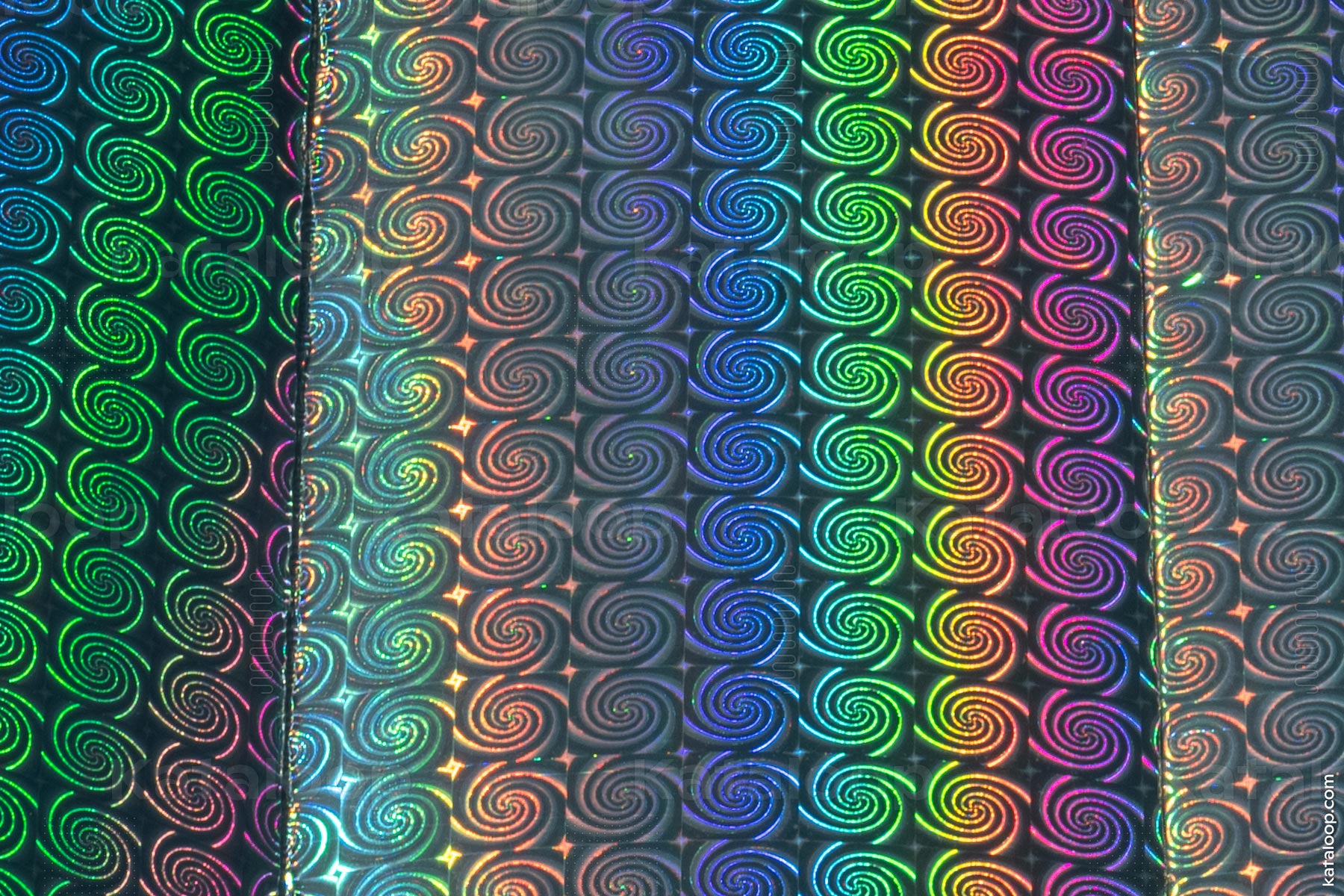
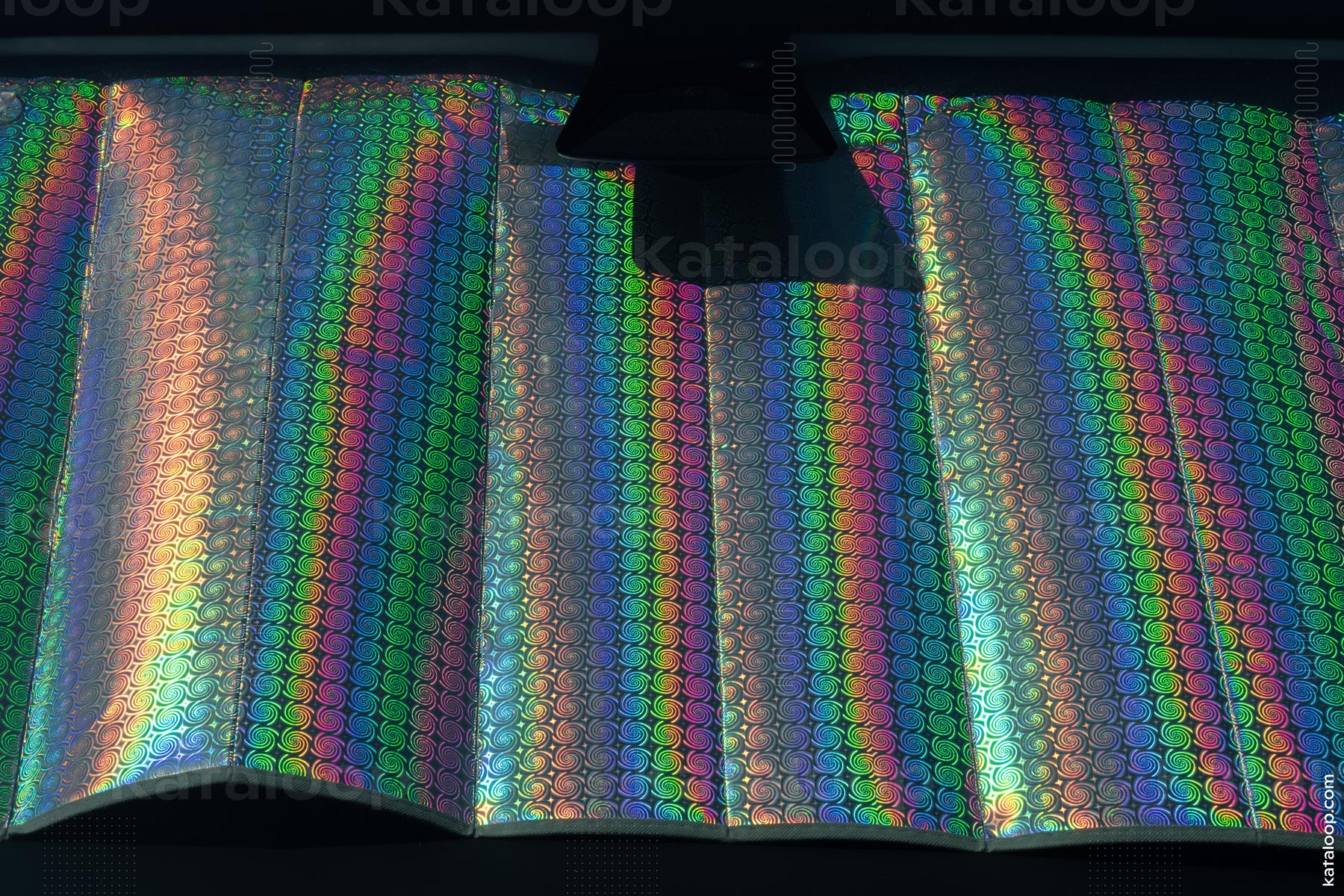
Colorful holographic patterns on reflective surface
Select your license:

Questions about the subject, usage, technology & more
How does holographic foil produce its rainbow color effect?
Holographic foil uses a microscopic diffraction grating, a surface engraved with thousands of parallel lines per millimeter, to split white light into its spectral colors. As the viewing angle changes, different wavelengths reflect toward the eye, producing the shifting rainbow effect. The swirl pattern visible here is an embossed design pressed into the metallic substrate before the holographic layer is applied.
How can this photo be used?
At 6737 x 4491 pixels, this stock photo is well suited as a large-format background for music covers, festival posters, or packaging designs in beauty and fashion. The commercial license on Kataloop permits use in, for example, advertisements, app interfaces, presentation decks, or social media campaigns that call for a futuristic visual language.
What mood does this photo convey?
The densely folded swirl grid creates a rhythmic, mildly hypnotic impression. The vertical color bands shifting from gold and orange through green to blue and pink feel simultaneously dynamic and structured. The image evokes associations with technology, 1990s pop culture, and contemporary rave aesthetics without veering into kitsch.
What equipment was used to capture this photo?
The sharp detail in this holographic swirl texture is made possible by the Sony Alpha 1 (ILCE-1) paired with the FE 24-70mm F2.8 GM II lens. The Alpha 1's 50-megapixel sensor captures even subtle color gradients and reflections in full resolution. The fast GM zoom maintains minimal distortion at mid-range focal lengths, reproducing the foil's repeating pattern with precise accuracy.
What visual style or trend does this photo represent?
Holographic surfaces have enjoyed a sustained revival since the mid-2010s across packaging, fashion, and digital design. The current shift toward maximalist, sensory-rich visuals on social media is driving further demand for textures like this. The image also fits the retro-futurist aesthetic that brands and music productions are actively drawing on in current campaigns.
Lisbon ranks among the sunniest capitals in Europe and is celebrated for its vibrant creative scene, historic azulejo tiles, and the characteristic interplay of light and color. The city draws photographers and designers alike. The intense southern European light makes Lisbon a compelling location for material and texture shots, including abstract studies like this holographic foil close-up.